 Reviews

 Proudly American

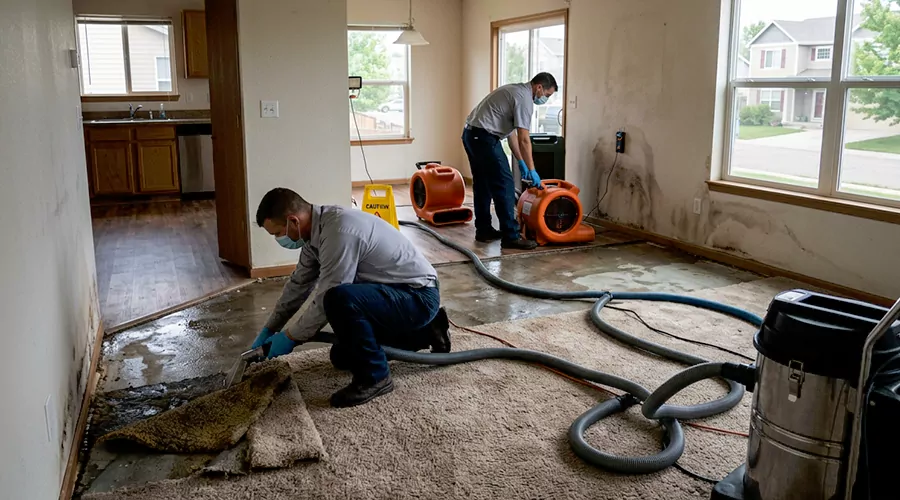
Water damage restoration is the process of removing unwanted water and drying affected building materials before repairing the damage. In 2026, residential restoration can cost about $450 for a limited loss and reach $16,000 for extensive damage. Larger disaster-level losses can cost much more.
Fast action matters because moisture doesn't stay where you first see it. Water can move beneath flooring or enter drywall and insulation. Wet materials should generally be dried within 24 to 48 hours to reduce the chance of mold growth.
What Is Water Damage Restoration?
Water damage restoration returns a wet property to a dry and usable condition after a leak or flood. The work usually includes finding the source and removing excess water. Drying follows before damaged materials are cleaned or repaired. Hidden moisture must also be addressed before reconstruction begins.
The exact process depends on where the water came from and how far it traveled. A small clean-water leak needs a different response than contaminated floodwater.
A typical restoration project follows these steps:
- Identify and stop the source of water.
- Inspect the affected rooms and materials.
- Measure how far moisture has traveled.
- Remove standing water with extraction equipment.
- Begin controlled drying and dehumidification.
- Remove materials that can't be safely saved.
- Clean affected surfaces when contamination is present.
- Confirm that wet materials have reached acceptable moisture levels.
- Complete any needed repairs or reconstruction.
Water mitigation refers mainly to actions that stop additional damage. Water remediation focuses more on moisture or contamination that must be removed.
Water damage repair usually comes later. Repair may involve replacing drywall or restoring damaged flooring after the affected structure is dry.
When Is Water Damage Restoration Needed?
Restoration is needed when water has moved beyond a small surface spill or entered absorbent building materials. It becomes more urgent when water reaches walls or floors. Contaminated water also requires a more cautious response. Delayed drying can increase the amount of material that must eventually be removed.
Common situations that can require restoration include:
- A pipe bursts and releases water across a room.
- A supply line leaks behind a wall or cabinet.
- A water heater fails and floods the surrounding area.
- Rain enters through a damaged roof.
- Groundwater enters a basement.
- An appliance leaks across finished flooring.
- A toilet overflow affects porous materials.
- Water moves through a ceiling into the room below.
- Carpet remains wet after the visible water is removed.
- A sewage backup introduces contaminated water.
Emergency water damage deserves immediate attention when standing water is spreading or electrical equipment is exposed. The same applies when a ceiling begins sagging after a leak.
A small spill on a hard surface usually doesn't require full residential water damage restoration. The dividing line is whether moisture has entered materials that are difficult to dry with normal household methods.
Why Does Water Damage Become Worse Over Time?
Water continues moving after the original leak stops because porous materials absorb moisture. Drywall can draw water upward while wood flooring can hold moisture beneath its surface. Insulation can also stay wet after the visible portion of a wall appears dry. This hidden moisture increases the repair scope.
During the first several hours, fast water damage removal can limit how far moisture travels. Materials that remain saturated for longer periods can begin swelling or losing their original shape.
The 24 to 48 hour period deserves special attention. Mold needs moisture to grow, and wet building materials should generally be dried within this period when possible.
How Damage and Cost Can Progress?
There isn't a fixed dollar increase for every hour that drying is delayed. Cost depends on the source and the amount of material affected. However, a larger affected area normally means more extraction or drying work.
| Damage Scope | Typical Condition | 2026 Cost Context |
|---|---|---|
| Limited damage | Small clean-water loss with little material damage | Can begin around $450 |
| Typical residential loss | Drying with some affected building materials | Often about $2,000 to $6,000 |
| Extensive damage | Large wet area with significant material repair | Can reach about $16,000 |
| Severe disaster loss | Major contamination or widespread structural damage | Can exceed normal residential ranges |
Water damage restoration cost also changes when contamination is present. Clean water is usually simpler to handle than sewage or outside floodwater.
The counterintuitive point is that the amount of visible water isn't always the best measure of severity. A small leak hidden inside a wall can create more damage than a larger spill that stays on a nonporous floor and is removed immediately.
What Are the Warning Signs of Hidden Water Damage?
Hidden water damage often changes the appearance or texture of building materials before the full problem becomes visible. Flooring can react first while drywall may soften over time. Persistent odor can also indicate that damp materials remain behind a finished surface.
Look for these signs:
- Paint begins bubbling or peeling without another clear cause.
- Drywall feels softer than nearby unaffected areas.
- Baseboards begin swelling or separating from the wall.
- Hardwood flooring starts cupping or changing shape.
- Laminate flooring begins lifting at the seams.
- Carpet feels dry on top but damp underneath.
- A ceiling stain becomes larger after rain or plumbing use.
- A previously repaired stain returns.
- A musty smell remains after surface cleanup.
- Indoor humidity stays unusually high in one area.
- Cabinets begin swelling near plumbing fixtures.
- Flooring feels loose or soft underfoot.
Carpet water damage deserves extra attention because padding can hold moisture below the visible fibers. Wet carpet drying must address the pad and the material underneath it.
Furniture water damage can follow the same pattern. Upholstered items may hold moisture deeper inside even when the outside fabric begins to feel dry.
What Types of Water Damage Are More Serious?
The source of the water strongly affects the cleanup method because not every water loss has the same contamination risk. Water from a broken supply pipe starts differently from sewage or storm flooding. Contact with contaminated water can create health risks beyond the physical damage to the building.
Water losses are commonly grouped by contamination level.
Clean Water
Clean water begins from a sanitary source such as a broken supply line. Fast extraction can often save more materials when contamination hasn't been introduced.
A clean-water loss can still become expensive when it spreads through several rooms. The source alone doesn't determine the amount of damage.
Gray Water
Gray water contains a higher level of contamination than clean water. Certain appliance discharges can fall into this category depending on the circumstances.
Materials exposed to this water need more careful evaluation. Simple drying may not be enough for every porous surface.
Black Water
Black water can contain sewage or other harmful contamination. Outside floodwater is also treated cautiously because its contents aren't always known.
Black water remediation can require material removal and controlled cleaning procedures. Household members should avoid direct contact with contaminated floodwater.
How Long Does Water Damage Restoration Take?
Many residential water losses need about 24 to 72 hours of active drying after the standing water is removed. The complete project can take longer when drywall or flooring needs replacement. Severe flooding can extend the process further because structural repairs don't begin until the affected areas are ready.
Structural drying is based on the condition of the material rather than the number of days alone. Dense wood can take longer to release moisture than an exposed hard surface.
Drying time is affected by several factors:
- The amount of water that entered the property
- How long the materials remained wet
- The type of flooring or wall material involved
- The amount of hidden moisture
- Indoor humidity during drying
- Whether contaminated materials must be removed
- The number of rooms affected
- How quickly water extraction begins
Water damage extraction removes the bulk water first. Air movement then helps moisture evaporate from wet materials while dehumidification removes that moisture from the indoor air.
The useful lesson is not to stop drying because the room looks normal. Water can remain below flooring or inside wall assemblies after visible surfaces have changed appearance.
Can You Handle Minor Water Damage Yourself?
A very small clean-water spill can often be handled at home when the source has stopped and no hidden materials were saturated. DIY cleanup isn't appropriate when sewage or floodwater is involved. Standing water near electrical equipment also creates a safety risk that should not be approached casually.
For a minor clean-water event, you can take these basic steps:
- Stop the water source if you can do so safely.
- Move dry belongings away from the affected area.
- Remove a small amount of standing water with safe equipment.
- Improve ventilation when weather conditions allow.
- Use a dehumidifier to lower indoor moisture.
- Check carpet padding instead of judging only the carpet surface.
- Watch nearby baseboards for swelling.
- Check the opposite side of an affected wall when accessible.
Indoor relative humidity should generally stay below 60 percent. A range of about 30 to 50 percent is preferable for normal indoor moisture control.
A basic humidity meter can help you compare the affected room with a dry part of the home. However, normal room humidity doesn't prove that moisture isn't trapped inside a wall.
DIY water damage clean up should stop when contamination is suspected or materials remain wet despite active drying. Opening structural cavities without knowing what is behind them can also create new problems.
When Should You Call a Water Damage Professional?
Professional assessment makes sense when moisture has spread into walls or other hidden areas. Large losses also require more drying capacity than household equipment normally provides. Contaminated water creates another clear trigger because exposure and material disposal require greater care. Electrical hazards require a qualified response as well.
Consider professional help when:
- Standing water covers a large section of the property.
- More than one room is affected.
- Water has entered walls or ceilings.
- Hardwood flooring begins buckling.
- Carpet padding remains saturated.
- Insulation becomes wet.
- Sewage enters the property.
- Outside floodwater enters the home.
- Water reaches electrical outlets or equipment.
- A musty odor develops after cleanup.
- Wet materials aren't drying within the first day.
- The source of the moisture can't be found.
A restoration professional can use moisture meters to check materials below the surface. Thermal imaging can also help identify areas that deserve closer moisture testing.
Commercial equipment can support water damage mitigation when moisture has spread beyond what household fans can manage. Dehumidifiers remove moisture from indoor air while air movers speed evaporation across wet materials.
Emergency water damage cleanup is especially useful when time is working against the property. The goal isn't simply to make the room look dry. The goal is to determine what became wet and whether it can be dried safely.
What Can Be Saved After Water Damage?
Many materials can be saved when clean water is removed quickly and drying begins before major deterioration occurs. Hard surfaces usually respond better than absorbent materials. The source of the water also matters because contaminated materials may require removal even when they still look physically intact.
Materials that can sometimes be dried or restored include:
- Solid wood furniture
- Some hardwood flooring
- Concrete surfaces
- Certain rugs
- Nonporous household items
- Framing that remains structurally sound
Materials that may require replacement after heavy saturation include:
- Swollen particleboard
- Damaged drywall
- Saturated insulation
- Contaminated carpet padding
- Severely warped laminate
- Mold-damaged ceiling tiles
Home water damage repair shouldn't begin until the moisture problem has been corrected. Installing new drywall over damp framing can trap moisture inside the finished wall.
The same principle applies to reconstruction after water damage. Rebuilding too early can hide the original moisture rather than correcting it.
How Can You Reduce the Risk of Future Water Damage?
Preventing another water loss starts with finding weak points before they fail. Plumbing connections should be checked regularly while gutters should direct rain away from the property. Homes with recurring groundwater problems also need working drainage systems. Early inspection usually costs far less than repairing widespread moisture damage.
A practical home maintenance routine includes:
- Check visible plumbing every month for drips or corrosion. Pay close attention to supply lines below sinks and behind toilets.
- Inspect washing machine and dishwasher connections several times each year. Replace damaged hoses before they fail.
- Look around the water heater for rust or unexpected moisture.
- Clean gutters when leaves or other debris begin restricting drainage.
- Confirm that downspouts discharge water away from the foundation.
- Test the sump pump before periods of heavy rain.
- Inspect ceilings after major storms for new stains.
- Check windows and exterior doors for signs of water intrusion.
- Watch basement walls for new damp areas after prolonged rain.
- Investigate unexplained increases in indoor humidity.
A small plumbing inspection can reveal moisture before it becomes a home water damage repair project. Early action also reduces the chance that wet materials will need removal.
The strongest prevention habit is simple. Investigate unexplained moisture when you first notice it instead of waiting for visible damage to spread.
Conclusion
Water damage restoration becomes necessary when water moves beyond a simple surface spill and enters building materials that can't dry on their own. Fast extraction and controlled drying can limit damage before flooring or walls deteriorate. Contaminated water and hidden moisture deserve greater caution. If you've noticed unexplained dampness this week, check the source and surrounding materials before the affected area grows.
Frequently Asked Questions
Is water mitigation the same as restoration?
No. Mitigation focuses on stopping additional damage and removing immediate moisture. Restoration includes the later work needed to return damaged areas to usable condition.
Can water damage disappear after it dries?
The visible moisture can disappear while damage remains underneath the surface. Warped flooring or weakened drywall can remain even after the material stops feeling wet.
Can a wall look dry while moisture remains inside?
Yes. Moisture can remain inside drywall or insulation after the painted surface appears normal. Surface appearance alone isn't a reliable drying test.
Does every plumbing leak require restoration?
No. A small leak that stays on a nonporous surface may only need basic cleanup. Restoration becomes more likely when water reaches absorbent materials or hidden spaces.
Should wet drywall always be replaced?
Not always. The decision depends on contamination and the condition of the material. Drywall that has lost strength or contains contamination is more likely to require removal.
Can water damage cause mold?
Persistent moisture can support mold growth. Wet materials should generally be dried within 24 to 48 hours to reduce that risk.